Bedding · A practical guide
Percale or Sateen Sheets: Which Weave Fits Your Sleep Style?
A bed is a small climate of its own. The fabric closest to your skin can feel crisp and airy, or smooth and softly draped—and the difference often begins not with the cotton itself, but with the way its threads cross. Understanding percale and sateen can help you choose sheets that suit your preferred texture, bedroom temperature, and everyday routine.
Two weaves, two distinct sensations
Imagine smoothing a freshly made bed with your palm. One surface feels cool, crisp, and composed, with a subtle matte finish. Another feels silkier, with a gentle sheen and a fluid drape that seems to settle around the body. These are familiar contrasts between percale and sateen, two common cotton sheet weaves.
The terms describe construction, not the fiber itself. Cotton can be woven as percale or sateen; the cotton’s length, quality, and finishing still influence how a sheet feels and how it wears. A useful comparison, then, is not simply “cotton versus cotton,” but a combination of fiber, weave, finishing, and care.
Neither weave is universally better. The right choice depends on what you notice when you climb into bed: a preference for crispness or smoothness, whether you tend to sleep warm or cool, and how much time you want to spend caring for laundry. Even the room’s climate and your duvet can change how the sheets feel across the night.
What makes percale feel crisp?
Percale is generally made with a simple one-over, one-under pattern: each thread passes over one thread and beneath the next. This balanced structure gives the cloth a comparatively matte surface and a crisp hand. It is the kind of texture many people associate with a freshly laundered bed in a cool, bright room.
Because the weave is open and balanced, percale is often described as breathable and light. Air can move through the fabric, and the sheet may feel less clingy than a more fluid weave. That can be appealing to people who sleep warm, live in a humid climate, or simply enjoy a fresh, dry-feeling surface. It does not actively cool the body or guarantee a particular temperature; the sensation also depends on the room, bedding layers, and individual comfort.
Percale’s crispness can be an acquired pleasure. New sheets may feel firm or slightly papery at first, especially if you are accustomed to smoother fabrics. With regular washing, cotton percale often softens while retaining its characteristic structure. The result is typically relaxed rather than glossy: a sheet that lies neatly but does not drape closely around the body.
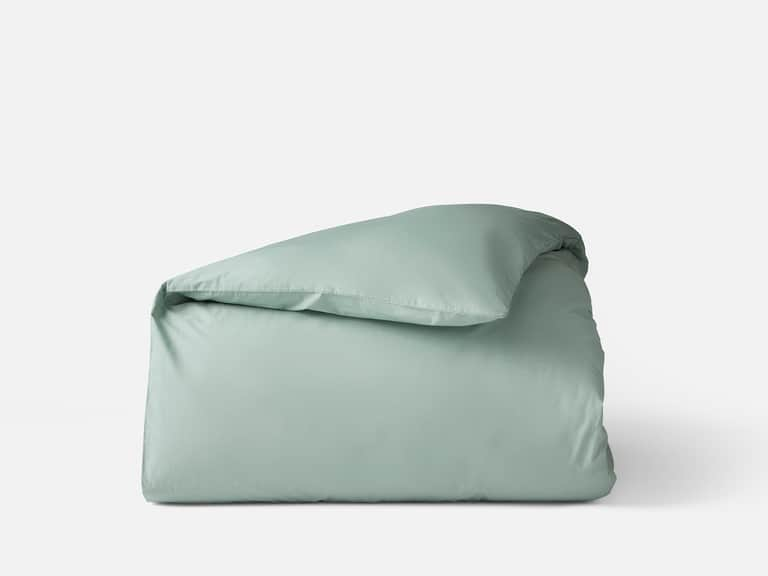
For a tangible example of the weave beyond a fitted sheet, the Refined Organic Percale Duvet Cover is made from GOTS-certified organic cotton percale. Its construction includes interior ties and hidden coconut-shell buttons, details that keep a duvet insert in place while illustrating the straightforward, breathable character often associated with percale. A duvet cover is not a sheet, of course, but it can help show how the same weave feels across another layer of the bed.
Why sateen feels smoother
Sateen uses a different arrangement of threads. In a common sateen structure, one thread passes over several others before going beneath one. More yarn is exposed along the fabric’s surface, creating a smoother hand and a soft, understated sheen. The cloth tends to fall in more fluid folds than percale.
That close, smooth sensation can feel welcoming in a cool room or during colder months. Sateen often seems warmer to the touch than percale because it drapes more closely and usually feels less airy. This is a matter of perception and construction, not a promise that the fabric will reliably raise body temperature. A heavy duvet, room heating, and personal sleep habits matter too.
Some people value sateen for its soft, almost silky feel without choosing a synthetic fabric. Others find the smooth surface too warm or too slippery. Its sheen can lend the bed a gently polished appearance, while the drape creates soft folds rather than the tailored, crisp lines many associate with percale.
Sateen’s exposed surface threads can be more vulnerable to snagging or visible wear than the more balanced structure of percale, depending on yarn quality, construction, and use. That does not mean sateen is necessarily short-lived. Good fabric care—washing according to the label, avoiding excessive heat, and not overloading the machine—helps protect either weave.
Percale vs. sateen at a glance
| Consideration | Percale | Sateen |
|---|---|---|
| Surface feel | Crisp, matte, and structured | Smooth, soft, and slightly lustrous |
| Drape | Light and comparatively neat | Fluid and closer to the body |
| Common preference | People who enjoy a fresh, airy feel | People who enjoy a silky, cozy feel |
| First impression | Can feel firm or crisp when new | Often feels smooth from the start |
| Appearance | Mostly matte | Subtle sheen |
| Care priorities | Follow label; avoid harsh heat | Follow label; protect smooth surface |
These are general tendencies, not guarantees. Fiber quality, yarn size, finishing, and individual preferences all affect the feel of a particular sheet.
Start with your sleep temperature
Temperature is often the first clue in choosing between the two cotton weaves. If you routinely kick off covers, wake feeling warm, or live somewhere with hot summers, percale’s lighter, more open feel may be appealing. Its crispness can seem refreshing when the room is warm, though no sheet can substitute for a comfortable bedroom temperature or appropriate bedding layers.
If you are often chilly, prefer a cocooning bed, or like fabric that drapes smoothly over your legs, sateen may feel more comforting. It can be a natural fit for a cool bedroom or for someone who enjoys a softer surface against the skin. In a warm room, however, that same closeness may feel too enveloping.
Think about the whole bed rather than one textile in isolation. A light duvet paired with sateen can feel different from a thick comforter paired with percale. A mattress protector, pajamas, room humidity, and how many people share the bed also shape the microclimate. If you are changing sheets because you sleep hot, consider making one change at a time so you can tell what actually helps.
Texture is personal, not a performance test
Words such as “luxurious,” “hotel-like,” and “cooling” can make sheet shopping sound more objective than it is. In practice, texture is intimate. Someone who loves the neat resistance of crisp percale may find sateen too slippery; someone else may find percale stiff and prefer sateen’s smoothness.
Consider what your hands and skin already tell you. Do you gravitate toward crisp cotton shirts, linen, and lightweight fabrics? Percale might be a promising starting point. Do you prefer smooth cotton, soft brushed fabrics, or a fluid drape? Sateen could be closer to your preference. These comparisons are only clues: bedding is used for hours at a time, in a warm and layered environment, so a brief touch in a shop cannot perfectly reproduce sleeping in it.
Skin sensitivity can make texture especially noticeable. Some people enjoy the crisp feel of percale; others prefer the glide of sateen. There is no universal rule that one weave is gentler for everyone. If a fabric irritates your skin, investigate the specific product’s fiber, finish, detergent, and laundering instructions rather than assuming the weave alone is responsible.
Thread count is only one part of the story
Thread count refers to the number of threads in a given area of fabric, but it is not a complete measure of comfort or quality. A larger number does not automatically mean softer, more breathable, or more durable sheets. Yarn quality, fiber length, weave, and finishing all matter. Comparing two sheets solely by thread count can obscure the qualities you will actually feel.
When comparing percale and sateen, remember that each weave has a different surface character even when the fiber is similar. A cotton percale may feel crisp at a moderate thread count, while cotton sateen at a similar count may feel smoother and more fluid. The number is useful as one specification, not as a verdict.
Labels can also help clarify what the cloth is made from and how it should be cared for. If organic sourcing is important to you, look for a clear description of the certification and what it applies to. Certification does not determine whether a sheet will feel soft or cool, but it can provide information about particular standards in the supply chain.
A care routine that protects the weave
Sheets collect the ordinary traces of sleep: body oils, perspiration, skin cells, and dust from the room. Washing them regularly helps keep the bed fresh, but care habits also influence how cotton feels over time. Start with the label on the specific set; recommendations vary by fabric, finish, and construction.
- Wash before first use if the care label allows. This can remove packaging residue and help the fabric settle into its everyday feel.
- Use a suitable amount of detergent. Excess detergent can leave residue that dulls the hand of either weave.
- Avoid unnecessarily high heat. Gentle washing and lower drying temperatures can reduce wear and help preserve fit.
- Give the load room to move. Overcrowded laundry can wash and dry unevenly and may increase creasing.
- Store sheets fully dry. Folding clean, dry bedding helps keep it ready for the next change.
Percale’s crispness may soften with washing, while sateen’s smoothness can benefit from avoiding rough treatment and abrasion. Neither needs complicated rituals. Consistent, label-guided care is more useful than relying on aggressive detergents or very hot drying in pursuit of a particular finish.
How to make the choice with confidence
If possible, feel both weaves in person. Rub a small area between your fingers, then notice how the fabric falls when you lift it. Does it have a clean, lightly structured feel, or does it glide and drape? Ask whether the sample is new or washed, since finishing can change the first impression.
If you are shopping online, read beyond broad claims. Look for the fiber, weave, care instructions, and dimensions. Reviews may offer clues about how a sheet behaves after washing, but remember that comfort descriptions reflect individual preferences. One sleeper’s “crisp” may be another’s “rough”; one person’s “silky” may feel too warm to someone else.
You can also make a small, low-pressure experiment. If your current sheets are sateen and you suspect they feel too warm, try percale for one season or one bed. If percale feels too firm, give it several washes before deciding, as long as the fabric is otherwise comfortable and the care instructions are followed. The aim is not to choose the most fashionable weave; it is to find a surface you look forward to returning to.
Quick guide: which weave may suit you?
- Choose percale as a starting point if you prefer a crisp, matte texture and a lighter, airier feel.
- Consider percale if you tend to sleep warm or want sheets that feel less close to the body.
- Consider sateen if you want a smooth surface, a soft sheen, and more fluid drape.
- Try sateen if you enjoy a cozy, close-fitting feel, especially in a cooler bedroom.
- When uncertain, prioritize the fabric details and care instructions over thread count alone.
These are starting points rather than rules. A person who sleeps warm may still love sateen, and someone in a cool climate may prefer percale. Comfort is shaped by the sleeper as much as by the sheet.
Frequently asked questions
Are percale sheets cooler than sateen?
Percale often feels airier because of its crisp hand and balanced weave, while sateen usually feels smoother and more closely draped. That can make percale the preferred choice for some warm sleepers. Actual temperature comfort depends on room conditions, the rest of the bedding, and personal preference; weave alone cannot guarantee that you will sleep cooler.
Do percale sheets get softer over time?
Cotton percale commonly softens with regular washing while keeping much of its crisp, matte character. How quickly it changes depends on the cotton, finishing, and care. If it feels firm when new, follow the care label and assess it after several washes rather than judging only by the first night.
Are sateen sheets shiny?
Sateen often has a subtle sheen because its weave exposes more thread on the surface. The degree of shine varies by fabric and finish. Many sateen sheets look softly luminous rather than glossy.
Which weave lasts longer?
There is no reliable answer based on weave alone. Fiber quality, yarn strength, construction, laundering, and everyday wear all affect longevity. Percale’s balanced structure is often valued for durability, while sateen can also serve well for years with appropriate care. Compare the product’s construction and care guidance, not just its weave name.
Can I use percale and sateen together?
Yes. Bedding does not have to be made from one matching weave. You might use percale sheets with a sateen duvet cover, or combine textures in whatever way feels comfortable. Just consider the whole bed’s warmth and make sure each piece can be cared for appropriately.
The most useful distinction is the one you feel
Percale and sateen offer two different routes to a comfortable bed. Percale brings a crisp, breathable character and a quietly matte appearance; sateen offers smoothness, gentle sheen, and a more flowing drape. The weave can influence the first touch and the way the fabric settles through the night, but it is only one part of the story.
Start with your preferred texture, then consider your bedroom temperature, other bedding layers, and laundry habits. Choose a clear, well-described fabric that suits those needs, and give it a fair trial. In the end, the best sheets are not the ones with the grandest claims. They are the ones that make the bed feel like a place you want to return to.